If you’re trying to choose between Wake Forest and Youngsville, you’re not alone. These two towns can overlap on budget more than many buyers expect, but they offer very different day-to-day experiences. The good news is that once you look at inventory, commute patterns, home styles, and overall feel, the decision often gets much clearer. Let’s dive in.
Wake Forest vs. Youngsville at a Glance
For many buyers, the biggest surprise is that Wake Forest and Youngsville are not simply a pricey town versus an affordable town. The numbers show some overlap, especially depending on whether you’re looking at listing prices or closed sales.
Wake Forest is the larger and more established market. The town’s 2025 demographic profile shows 56,764 residents, and Census QuickFacts reports a 74.0% owner-occupied rate and a median value of owner-occupied housing units of $474,500. Youngsville is much smaller, with town planning materials describing about 2,503 residents in 2021 and a 2022 state-certified estimate of more than 2,600 residents.
Current listing data also show a clear size difference in the market. Wake Forest has a median listing price of $525,000, 759 active listings, and 39 days on market. Youngsville has a median listing price of $446,970, 250 active listings, and 56 days on market.
When you look at recent sale snapshots, the gap narrows. In March 2026, Wake Forest posted a $454,000 median sale price, while Youngsville posted $475,000. That tells you the mix of homes selling in each town can look different from the mix of homes currently listed.
Inventory and Choice
If you want more options, Wake Forest has the edge. With 759 active listings compared with Youngsville’s 250, you’re likely to see more variety in price points, neighborhoods, floor plans, and move-in timelines.
That deeper inventory can make your search feel less restrictive. If you need a certain layout, want newer finishes, or hope to compare several similar homes before making an offer, Wake Forest usually gives you a wider field.
Youngsville offers fewer choices, but that does not automatically make it a weaker option. A smaller pool can still work well if your priorities are more specific, especially if you care about lot flexibility or a smaller-town setting.
Townhome Options
Townhomes are one of the clearest differences between these markets. Wake Forest has 191 townhouses for sale at a median listing price of $340,000, while Youngsville has 35 townhouses at a median listing price of $263,000.
For a first-time or value-conscious buyer, that lower Youngsville entry point may stand out. Current examples include 3-bedroom, 2.5-bath townhomes around 1,442 square feet priced roughly from $261,990 to $266,185, with lawn maintenance included.
Wake Forest townhome inventory is broader and often reflects a denser suburban pattern. New-construction examples include 3-story townhomes priced around $379,990 to $394,990 with 3 to 4 bedrooms, 3 to 3.5 baths, 2-car garages, and about 2,268 to 2,336 square feet.
Home Styles and Lot Sizes
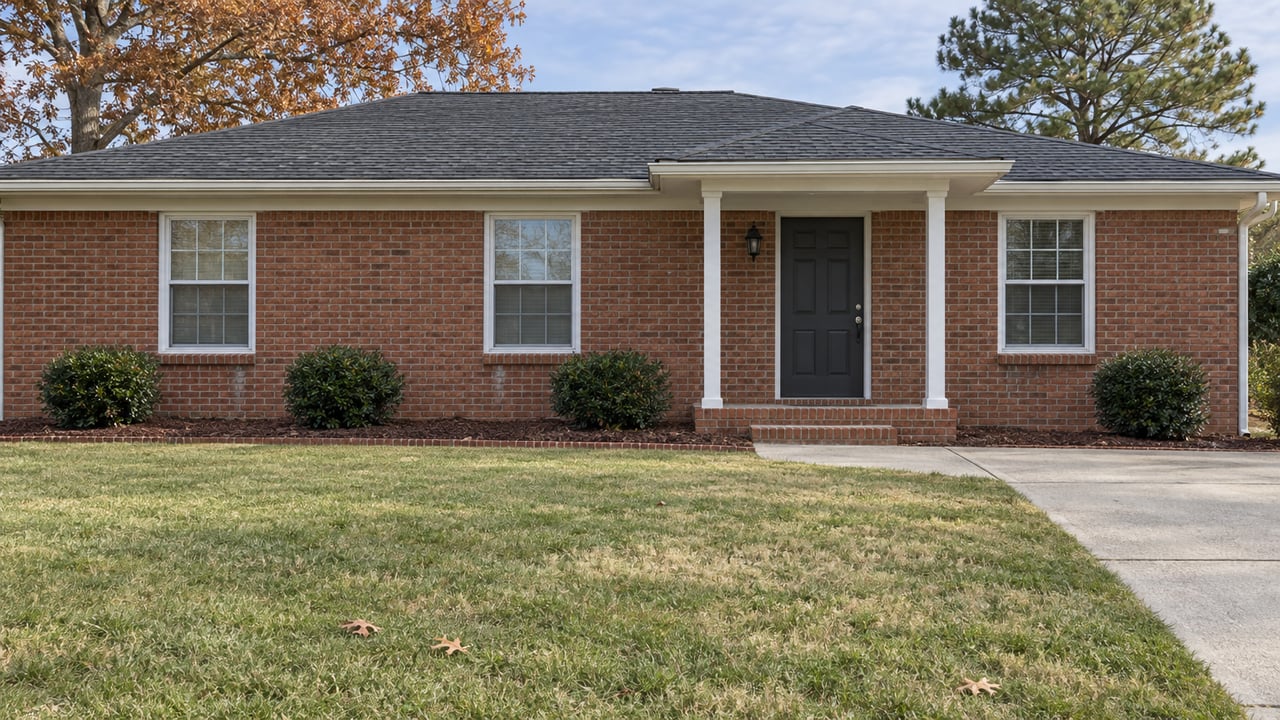
Your preferred home style may point you toward one town faster than price alone. Wake Forest tends to offer a denser suburban mix, while Youngsville shows more lot flexibility and a more transitional housing pattern.
In Wake Forest, detached-home examples range from a 0.28-acre lot at $400,000 to a 1.08-acre custom home at $1,097,000. That tells you larger lots do exist, but they often show up at the higher end of the market.
In Youngsville, active examples include a 1.58-acre lot at $259,000 and a 0.23-acre home built in 2024 at $390,000. For buyers who want land or newer construction without jumping immediately to the upper price tiers, that mix can be appealing.
Youngsville planning data also suggest a broader housing mix overall. A 2023 town planning packet reports about 61% single-family detached housing, about 44.9% owner-occupied homes, a 2021 median home value of $321,600, and growth in homes built since 2020. A 2025 town request for qualifications describes housing choices ranging from apartments to larger mini-farms.
Commute and Access
Commute may be the deciding factor for many Triangle-area buyers. If you expect to drive regularly toward Raleigh or other parts of the Triangle, Wake Forest will often feel easier in practice.
Census QuickFacts reports a mean travel time to work of 30.9 minutes in Wake Forest. The town also emphasizes transportation-linked amenities and has 15.5 miles of greenways, which adds to its more established suburban infrastructure.
Youngsville’s planning documents make the trade-off more direct. A 2025 town document says Youngsville sits near US 1, US 1A, and NC 96, while the town’s 2050 mobility materials report that more than 75% of workers living in Youngsville work outside Franklin County and 89% commute by car, truck, or van.
Those same materials note that the street network is already feeling pressure from congestion and safety concerns. In simple terms, Youngsville can work very well if you are comfortable with a more car-dependent routine and see space or home style as worth the extra drive.
Lifestyle and Daily Feel
Beyond numbers, these towns feel different. Wake Forest is the more established amenity-driven choice, while Youngsville is smaller and still shaping its next phase of growth.
Wake Forest describes its downtown as quaint, walkable, and full of small-town appeal. Official town pages highlight dining, shopping, nightlife, art galleries, specialty shops, and recurring events such as Friday Night on White, Forest Fest, the Farmers Market, and National Trails Day.
If you want a busier downtown, more established routines, and a wider menu of local activities, Wake Forest may feel like the easier fit. That can matter just as much as square footage when you picture your weekly life.
Youngsville presents a different kind of appeal. Town planning materials describe a place working through revitalization and growth, with goals centered on public spaces, a thriving downtown, connected places, planned infrastructure, and a healthy community.
A 2025 town document also says Youngsville wants to retain its small-town atmosphere while leveraging growth, with downtown anchored by locally owned businesses. For some buyers, that creates a sense of opportunity and a quieter pace that feels worth the trade-offs.
Which Buyers May Prefer Wake Forest
Wake Forest may be the better match if you want:
- A larger pool of available homes
- More townhome inventory
- A more established suburban environment
- A downtown with more existing events and amenities
- An easier Triangle commute in many cases
This option often fits buyers who want convenience, more choices, and a community that already feels built out in many key ways.
Which Buyers May Prefer Youngsville
Youngsville may be the better match if you want:
- A smaller-town atmosphere
- Lower townhome entry pricing
- More flexibility on lot size
- A mix of newer homes and land opportunities
- A community that is still growing and evolving
This option often fits buyers who are willing to trade some convenience for space, flexibility, or a less built-up feel.
How to Choose Between Them
If you’re deciding between these two towns, start with your non-negotiables. Ask yourself whether your top priority is commute, inventory, home type, lot size, or daily lifestyle.
A buyer who needs lots of listing choices and wants to compare multiple townhomes may lean toward Wake Forest. A buyer who wants a smaller setting and hopes to stretch value on a townhome or find more land may lean toward Youngsville.
It also helps to look beyond online price snapshots. Two towns can look similar on paper but feel completely different once you compare roads, neighborhood patterns, and the types of homes actually available during your search.
That’s where local guidance matters. If you’re weighing Wake Forest against Youngsville, Carmelina Hall can help you compare resale and new construction options, narrow your search based on how you really live, and make the process easier whether you’re local or relocating.
FAQs
What is the price difference between Wake Forest and Youngsville for buyers?
- Wake Forest currently shows a higher median listing price at $525,000 versus Youngsville at $446,970, but recent median sale prices were closer, with Wake Forest at $454,000 and Youngsville at $475,000 in March 2026.
Which town has more homes for sale, Wake Forest or Youngsville?
- Wake Forest has far more active inventory, with 759 listings compared with 250 in Youngsville.
Are townhomes cheaper in Youngsville than in Wake Forest?
- Yes. Youngsville townhomes show a median listing price of $263,000, while Wake Forest townhomes show a median listing price of $340,000.
Is Wake Forest or Youngsville better for commuting to the Triangle?
- Based on the available planning and commute data, Wake Forest will usually be the easier fit for buyers who want a shorter or simpler Triangle commute.
Does Youngsville offer larger lots than Wake Forest?
- Current examples suggest Youngsville may offer more lot flexibility at lower price points, while larger lots in Wake Forest are more likely to appear toward the higher end of the market.
How do Wake Forest and Youngsville feel different day to day?
- Wake Forest tends to feel more established, with a walkable downtown and a fuller calendar of events, while Youngsville feels smaller and more growth-oriented, with a focus on preserving its small-town atmosphere as it develops.