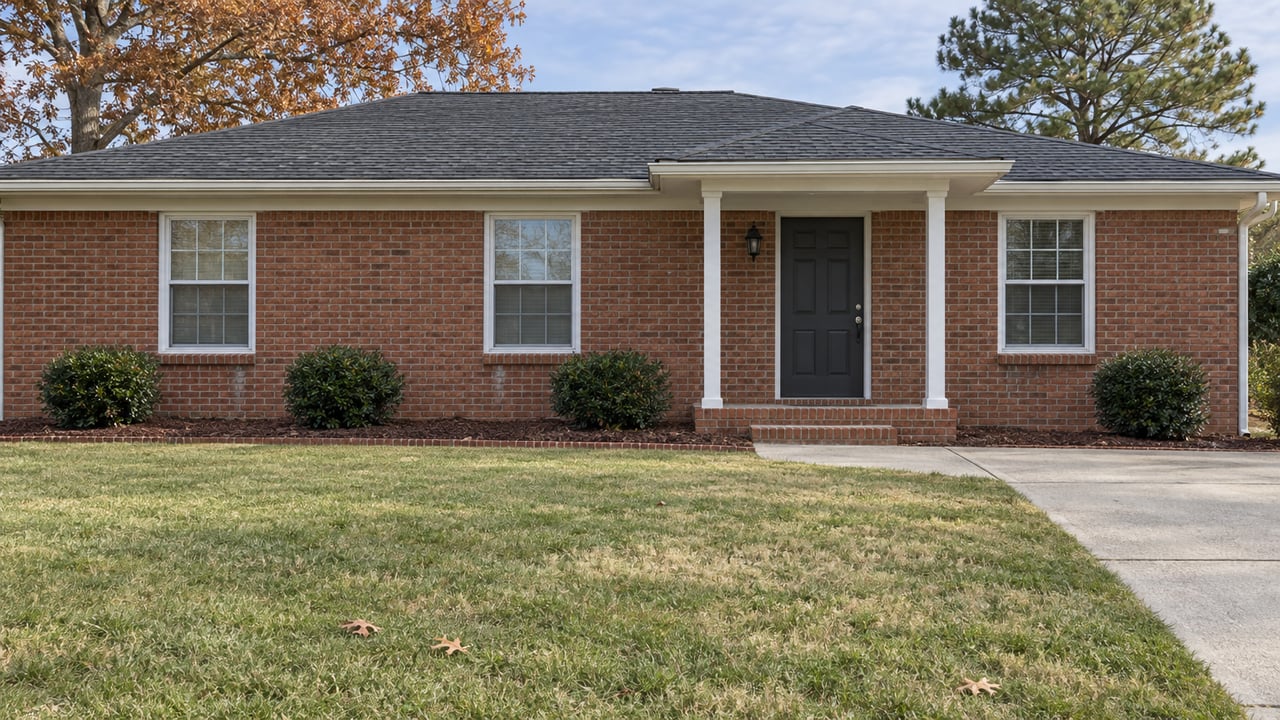
Picture two century-old houses three doors apart in central Raleigh. Same era, same wraparound porch, same peeling clapboard begging for a repaint. The City of Raleigh says the owner of the first can plan a window swap or rear addition without local historic-design review, and repaint the trim whatever color she likes. The owner of the second may need a COA for certain exterior changes; major work can mean paperwork and a public hearing before a citizen commission, while minor work is handled by staff.
Both houses get called "historic" by every listing agent in town. Only one of them needs local design review for many visible exterior changes.
That gap is the thing worth understanding before you fall for a listing in Five Points, Oakwood, Boylan Heights, or any of Raleigh's other old-money pockets. The word "historic" carries no weight of its own. What actually governs your renovation options, your resale math, and in some cases your price trajectory is which of two separate designation systems your address happens to sit inside.
Two Systems, One Confusing Word
Raleigh runs two entirely independent tracks for old neighborhoods, and a house can be on one, the other, or both at once.
The first is the National Register of Historic Places, a federal and state honor roll. For Hayes Barton, the City of Raleigh says contributing properties may be eligible for federal and state historic tax credit programs; National Register designation alone carries no design oversight from the city. Hayes Barton, the most prestigious of the Five Points neighborhoods, is a National Register district. So are Mordecai and Forest Park. Own a contributing house in any of them and the city will not review your choice of siding.
The second track is a local Historic Overlay District, or HOD, which is a zoning designation set by City Council. Many exterior changes to a property inside an HOD, including a new roofline or a replaced porch rail, require a Certificate of Appropriateness, commonly shortened to a COA, before work begins. Oakwood and Boylan Heights are HODs. So are Blount Street, Capitol Square, Moore Square, and Prince Hall. The Raleigh Unified Development Ordinance lists Oberlin Village and Glenwood-Brooklyn among Raleigh's eight HODs, with Glenwood-Brooklyn designated as a Streetside HOD. That puts at least eight Raleigh neighborhoods under active COA review right now.
Here is the part that trips people up: these two tracks stack. Boylan Heights and Oakwood are both National Register districts and local HODs simultaneously. A house there can be tax-credit eligible and COA-restricted at the same time. Hayes Barton, by contrast, only carries the National Register designation, so it has none of the renovation oversight.
| National Register District | Local Historic Overlay District (HOD) | |
|---|---|---|
| Reviews your renovation | No | Yes, for many exterior changes, via Certificate of Appropriateness |
| Tax credit eligible | Often, for contributing properties | Often, if also National Register |
| Governing body | State Historic Preservation Office | Raleigh Historic Development Commission |
| Raleigh examples | Hayes Barton, Mordecai, Forest Park | Oakwood, Boylan Heights, Blount Street |
What a COA Actually Makes You Do
Inside an HOD, not every project triggers a hearing.
The city splits that review into two lanes. Minor Work applications get approved administratively by preservation planning staff. Major Work applications go before the Certificate of Appropriateness Committee at a quasi-judicial evidentiary hearing. Some neighborhoods layer on a lighter version called a Streetside HOD, used in Glenwood-Brooklyn.
None of this is static either. New procedural rules for the COA process took effect on January 2, 2026 under a city text change aimed at aligning the local ordinance with state law. A buyer relying on a renovation guide from even a year ago is working from rules the city is actively rewriting.
What This Explains About the Price Data
Here's where the regulatory split starts to matter for your budget, not just your porch railing.
One market snapshot put Historic Oakwood's price growth at 45.1 percent in the twelve months through February 2025, a spike that far outran the broader city. Around the same general period, citywide Raleigh numbers told a quieter story. As of July 2026, the average Raleigh home price sat down 6.8 percent year over year, and a separate citywide median came in at $460,000, down 0.54 percent over the same span. Oakwood was moving in the opposite direction from the market around it.
Five Points tells a different story again. Neighborhood-level data from January 2026 placed typical values across Hayes Barton, Six Forks, and the Mordecai pockets in the $650,000 to $780,000-plus range. By August 2026, a portal snapshot for Five Points specifically showed a median listing price near $900,000. That's a real premium, but these snapshots cover different areas and measures. They don't establish a steady climb.
One plausible explanation sits right in the regulatory difference. Oakwood and Boylan Heights are COA-restricted HODs, which means every teardown, every major addition, every meaningful change to the built form has to clear COA review first. That's a structural ceiling on how fast the housing stock in those neighborhoods can change, layered onto small lot counts and strong downtown-adjacent demand. Hayes Barton carries none of that HOD review requirement, so the neighborhood's values may behave more like ordinary close-in Raleigh demand: strong, but without the same scarcity-driven jolt.
This isn't a claim that COA rules cause price spikes on their own. It's an observation that when a market segment's supply of buildable, alterable inventory is legally capped, price behavior in that segment tends to diverge from segments without the cap. Oakwood and Five Points sit three miles apart and get marketed with the same word, but these figures do not compare their price behavior over the same window.
Why Owners Put Up With It
The friction buys something. Each December, the Society for the Preservation of Historic Oakwood runs its Candlelight Tour, opening roughly ten private homes to the public for one weekend. The 2025 edition marked its 54th year, sold out ahead of the tour dates, and drew visitors who checked in at the 1914 Garland Tucker House on North Person Street before walking the neighborhood in small guided groups. That kind of sustained, decades-deep community investment in preserving a streetscape is not something a National Register plaque alone produces. It's a byproduct of the review process making sure the neighborhood keeps looking the way people fell in love with it.
Five Points has its own version of neighborhood identity without the review board. Hayes Barton Café and Dessertery has anchored the intersection for years. NOFO @ the Pig and The Rialto Theatre round out the commercial node at Glenwood Avenue and Whitaker Mill Road. The neighborhood feel is real in both places. It's just protected by different mechanisms.
Before You Fall for a Listing
Check a property's actual designation status before you get attached to a renovation plan. Raleigh's iMAPS tool lets you search an address and see whether it sits inside a local Historic Overlay District, a National Register district, or both. If you're eyeing a fixer in an HOD, ask your agent whether the specific work you have in mind would likely qualify as Minor Work, approved by staff, or Major Work, which means waiting for the next hearing. If the house is National Register only, ask about tax credit eligibility for contributing structures instead.
The question that actually matters isn't whether a house is historic. It's which kind.
If you're weighing a move into one of these neighborhoods and want a read on what a specific address can and can't do before you write an offer, Carmelina Hall can walk through the designation, the renovation math, and the current listing landscape with you directly.
FAQ
Does buying a historic home in Raleigh always mean I need city approval to renovate? No. Properties inside a local Historic Overlay District or designated as a Raleigh Historic Landmark may need a Certificate of Appropriateness for covered work. A home that's only on the National Register, like most of Hayes Barton, carries no city design review at all.
What if I just want to repaint before moving in? Check the property's designation first.
Is all of Five Points under historic overlay rules? No. Hayes Barton is a National Register district, not a local Historic Overlay District, so renovation there isn't subject to Raleigh Historic Development Commission review the way it is in Oakwood or Boylan Heights.
This article is general information, not legal, tax or financial advice. Consult a qualified professional about your situation.