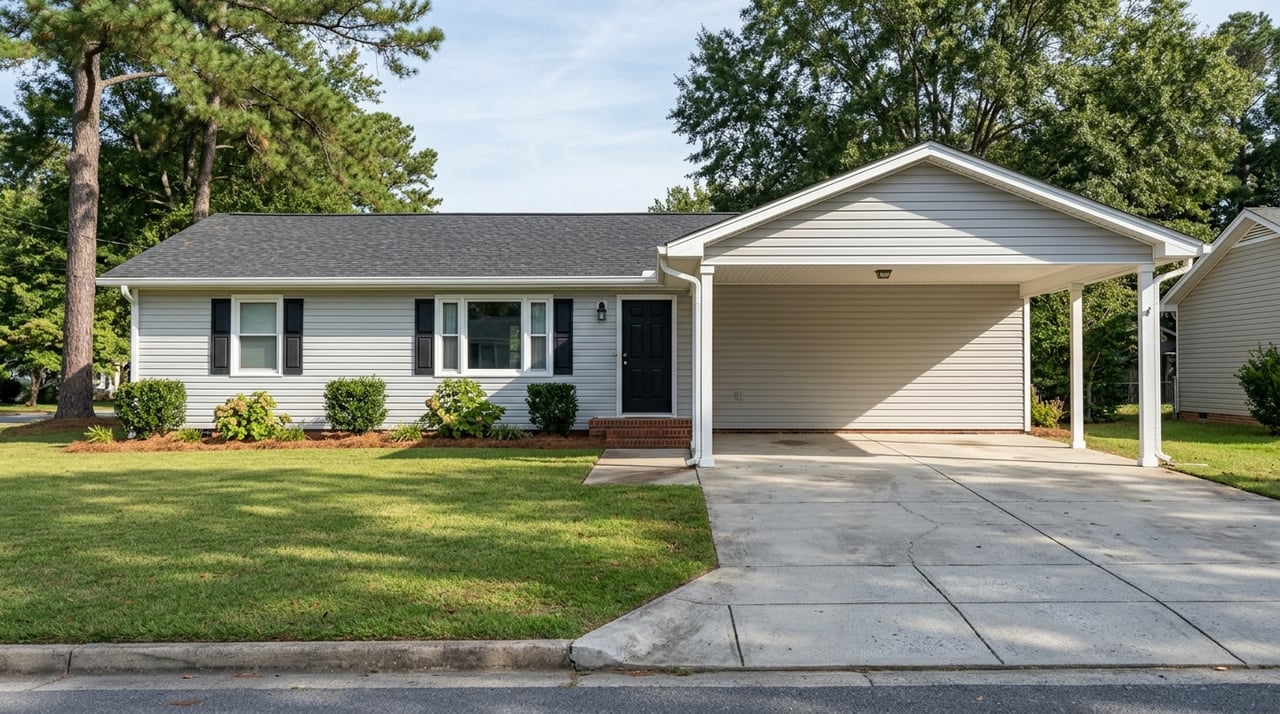
If you are trying to figure out when to buy or sell in Wake Forest, the answer is not as simple as “now” or “wait.” The market is still active, but it is no longer moving at the same breakneck pace many buyers and sellers remember. That creates both opportunity and uncertainty. In this guide, you will get a clear look at Wake Forest housing trends, what the latest numbers really mean, and how to time your move with more confidence. Let’s dive in.
Wake Forest Market Snapshot
Wake Forest remains a busy housing market, but it looks more balanced than an all-out bidding war environment. Redfin’s March 2026 housing market data shows a median sale price of $454,000, up 4.4% year over year, with homes selling in 57 days and receiving about 2 offers on average.
At the same time, Zillow’s March 31, 2026 update reported an average home value of $512,161, 354 active listings, 120 new listings, and a 37-day median to pending. Realtor.com’s February 2026 overview showed 655 homes for sale, 52 median days on market, and a 99% sale-to-list ratio.
The big takeaway is simple: homes are still selling, but buyers usually have a bit more breathing room than they did in a peak frenzy. Sellers can still do well, but pricing and preparation matter more.
Why Public Numbers Look Different
If you have compared market reports online, you may have noticed that the numbers do not always match. That does not mean one source is wrong. It usually means each platform is measuring something slightly different.
According to Redfin’s market explanation, closed-sale data, listing data, and home value indexes should be used directionally, not interchangeably. In plain terms, one site may focus on closed sales, another on listing activity, and another on estimated values. That is why the dollar amounts can vary even when they are all talking about Wake Forest.
For you as a buyer or seller, this means broad headlines only tell part of the story. Your price range, neighborhood, and timeline matter more than one townwide average.
Inventory Is Improving, But Still Tight
One of the biggest changes in Wake Forest is inventory. There are more homes available than there were a year ago, which gives buyers more options and gives sellers more competition.
Realtor.com reports that homes for sale in Wake Forest were up 12.47% year over year in February 2026. Zillow showed 354 active listings and 120 new listings as of March 31, 2026, while Redfin said March 2026 closed sales totaled 76, down from 87 a year earlier.
That combination matters. More listings and fewer closed sales can create a little more negotiating room for buyers. But it does not mean every seller has lost leverage.
Competition Still Exists
Even with more inventory, some homes are still drawing strong interest. Redfin’s data shows homes receive 2 offers on average, and 17.1% sold above list price. Zillow also reported that 10.4% of sales closed above list, though 77.4% closed under list.
That tells you this is not a one-speed market. A well-priced, well-presented home can still move quickly, while an overpriced or less competitive listing may sit longer and need adjustments.
For buyers, this means you should stay ready even in a more negotiable market. For sellers, it means your strategy needs to match current buyer expectations, not last year’s headlines.
Neighborhood Timing Matters Most
One of the clearest lessons from the public data is that Wake Forest is not one uniform market. Different parts of town are moving at different speeds and price points.
On Realtor.com’s neighborhood-level overview, Heritage showed a $650,000 median listing price and 27 median days on market. Northeast Wake Forest showed $365,000 and 86 days, Reynolds Mill showed $350,845 and 71 days, and Stonegate at St. Andrews showed $627,500 and 128 days.
That is why timing your move based only on townwide averages can lead you in the wrong direction. If you are selling, your pricing strategy should be based on your specific neighborhood and price band. If you are buying, your offer strategy may look very different depending on where you are searching.
What Pricing Trends Really Mean
Wake Forest price signals are mixed right now, and that is important to understand before making a move. Redfin showed the median closed-sale price at $454,000, up 4.4% year over year. Zillow’s home-value index was $512,161, down 1.8% over the prior year, while Realtor.com’s median listing price was $547,250, up 13.45% year over year.
At first glance, those numbers may seem contradictory. In reality, they suggest that asking prices, estimated values, and final sale prices are not moving in perfect sync. That often happens in a market where some sellers are still aiming high, but buyers are pushing back unless the home is priced well.
This can be good news for both sides. Buyers may have room to negotiate, and sellers who price smart from the start can still attract solid interest.
Sale-To-List Ratios Show A Negotiable Market
Another useful way to understand market balance is to look at how close homes are selling to their asking price. In Wake Forest, the latest numbers point to a market that leans seller-friendly, but not dramatically.
Redfin reports a 98.6% sale-to-list ratio. Zillow showed a median sale-to-list ratio of 0.984, and Realtor.com reported 99%, with homes selling 1.11% below asking on average.
That is a very different picture from a market where buyers routinely have to offer far above asking. Today, strong homes can still command attention, but many transactions leave room for discussion on price, terms, or repairs.
Wake Forest In The Context Of Wake County
It also helps to see how Wake Forest compares with the larger county market. Redfin’s Wake County page showed a March 2026 median sale price of $468,490 and 48 median days on market. Realtor.com showed 7,296 county homes for sale, 46 median days on market, a 99% sale-to-list ratio, and described Wake County as a seller’s market in February 2026.
So, Wake Forest is broadly in step with the surrounding area. It is active, still competitive in the right situations, and not overly loose. That can be reassuring if you are relocating into the Triangle and wondering whether Wake Forest is behaving differently from the broader regional market.
Mortgage Rates Still Affect Timing
If you are trying to time your move, mortgage rates are still one of the biggest factors to watch. Freddie Mac reported the 30-year fixed mortgage rate at 6.30% on April 16, 2026, down from 6.37% the week before and 6.83% a year earlier.
Even a modest rate improvement can change buying power and monthly payments. It can also bring more buyers into the market, especially during the spring season when activity tends to pick up anyway.
If you are buying, that means waiting for a perfect rate may not always be the best strategy. If lower rates bring more competition, the savings on interest could be offset by fewer choices or tougher negotiations.
Population Growth Supports Long-Term Demand
Wake Forest’s long-term demand story remains strong. The U.S. Census Bureau estimated the town’s population at 56,764 in July 2024, compared with 47,601 in April 2020. That is an 18.2% increase.
Population growth does not guarantee that every month will be hot, but it does help explain why buyer demand has remained durable even as the pace has cooled. More households moving into or around the area can support ongoing demand for both resale homes and new construction.
For buyers, that is a reminder that waiting too long can carry its own risks. For sellers, it supports the idea that there is still a real audience for well-positioned homes.
How Buyers Can Time A Move
If you are buying in Wake Forest, the best time to move depends on more than market headlines. Your financing, flexibility, preferred neighborhood, and tolerance for competition all matter.
A smart buyer timing strategy often includes:
- Getting pre-approved before you start seriously touring homes
- Watching inventory in your target area, not just Wake Forest overall
- Being ready to move quickly on well-priced homes
- Staying open to negotiation when a listing has been on the market longer
- Comparing rate changes with your monthly payment, not just focusing on headlines
In today’s market, you may find a better deal on a home that has been sitting longer, especially in a slower-moving submarket. But if the right home is priced well in a faster-moving area, hesitation can still cost you.
How Sellers Can Time A Move
If you are selling, timing is less about finding a magic month and more about launching with the right strategy. Buyers still respond to homes that show well, are marketed clearly, and are priced in line with the current market.
A strong seller timing strategy often includes:
- Reviewing recent neighborhood-level activity before setting a price
- Preparing your home before it hits the market
- Paying attention to current competition in your price range
- Understanding that buyers may negotiate more than they did in peak years
- Planning around your next move, especially if you need to buy after selling
This is where local guidance matters. A broad Wake Forest average cannot tell you how your specific home will perform against similar listings nearby.
The Best Time Is Personal
The clearest conclusion from the current data is that there is no one-size-fits-all answer for Wake Forest. Public numbers support a simple reality: the market is still active, but your best timing depends on your neighborhood, price range, financing, and life timeline.
If you are buying, you may have more room to negotiate than you would have in a peak frenzy. If you are selling, a thoughtful pricing and marketing plan can still put you in a strong position. The key is making a move that fits your goals, not just reacting to a headline.
If you want help making sense of your next move in Wake Forest, Carmelina Hall offers local guidance, responsive support, and a personalized plan whether you are buying, selling, or relocating.
FAQs
What do current Wake Forest housing trends mean for buyers?
- Buyers may have more negotiating room than in past peak markets, but well-priced homes can still move quickly and attract multiple offers.
What do current Wake Forest housing trends mean for sellers?
- Sellers can still succeed in this market, but accurate pricing, strong presentation, and neighborhood-specific strategy matter more than they did in a faster market.
How long are homes taking to sell in Wake Forest?
- Public reports showed about 52 to 57 days on market in early 2026, though timing varies widely by neighborhood and price point.
How important are mortgage rates when timing a move to Wake Forest?
- Mortgage rates remain a major factor because even small changes can affect affordability, buyer demand, and how competitive the market feels.
How should you time a move within different Wake Forest neighborhoods?
- You should base timing on the specific neighborhood, price band, and local inventory because different parts of Wake Forest are moving at very different speeds.