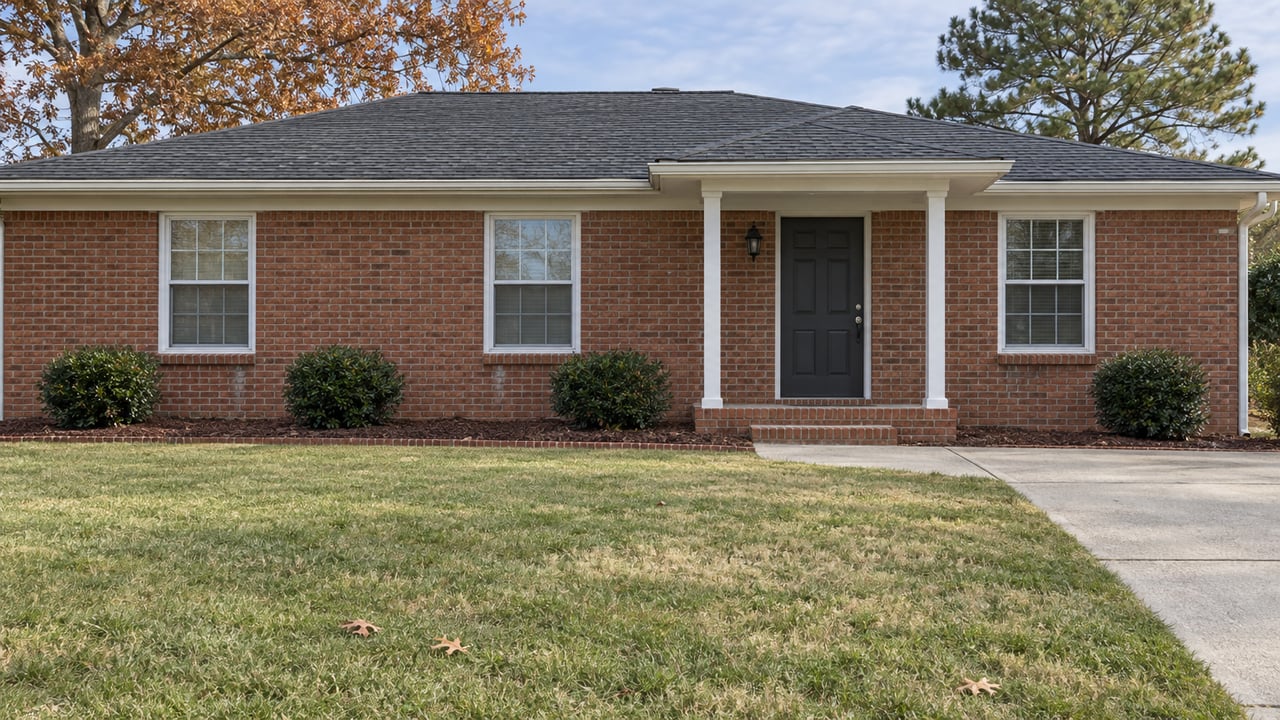
Two listings land in the same saved search: a three-bedroom brick-front on a quarter acre in Wake Forest, and a nearly identical floor plan fifteen minutes north in Youngsville. The Youngsville home is $75,000 cheaper. A buyer's first instinct is to ask what's wrong with it. Older HVAC? Worse lot? A school zone concern that isn't showing up in the listing photos?
Usually, the answer is none of the above. The gap between these two markets has almost nothing to do with the condition of the houses and almost everything to do with how long a seller has to wait for the right buyer to show up.
The gap, measured two different ways
In June 2026, the median sale price for a home in Youngsville was $414,900, with 401 homes sold that month, up from 321 a year earlier. Over the same window, Wake Forest homes were selling for an average of $526,000, up 8.5 percent year over year, while the median sale price across the three months ending May 2026 came in at $490,000, up 3.6 percent from the same period the year before.
Depending on which pair of numbers you compare, Youngsville looks somewhere between 15 and 21 percent cheaper than Wake Forest. That's a real spread, and it's worth pausing on why the range moves depending on how you slice it.
Wake Forest's average sale price runs noticeably higher than its median because a steady flow of luxury new construction is pulling the top of the market upward. A local pricing breakdown published in June 2026 put Wake Forest's typical home value near $515,000 on average against a median closer to $450,000 to $454,000, a gap the report attributed directly to high-end new builds skewing the average. Youngsville doesn't yet have that same luxury tail dragging its own average up, which means part of the "Wake Forest premium" isn't a tax on every home in town. It's concentrated in a slice of the market that a median-income move-up buyer probably isn't shopping in anyway.
What actually explains the rest of the gap
Here's the part that doesn't show up on a portal search: Youngsville homes take a lot longer to sell.
As of June 2026, the typical Youngsville listing spent 80 days on the market, up from 60 days the year before. Wake Forest, over the same stretch, averaged 38 days, down slightly from 41 the year prior. That's more than double the wait time in Youngsville.
If homes were sitting that much longer and getting marked down to move, that would tell a story about weaker demand or a real quality gap. But that isn't what's happening. Data from earlier this year on Youngsville sales showed typical sold prices landing around 99.5 percent of the final list price, with roughly three months of supply on the ground, well short of the six-month mark that usually signals a true buyer's market. Wake County as a whole told a similar story heading into summer: 99.1 percent of list price received on average in May 2026, alongside 4,593 active listings, up 5.4 percent from a year earlier.
Put those two facts together and the picture sharpens. Youngsville sellers aren't cutting prices to compensate for slower absorption. They're holding firm and simply waiting longer for a buyer who's ready to commit. That's a patience discount, not a quality discount, and it's a different thing to negotiate around.
| Youngsville (Jun 2026) | Wake Forest (May–Jun 2026) | |
|---|---|---|
| Median sale price | $414,900 | $490,000 (3-mo median) |
| Average sale price | — | $526,000 |
| Days on market | 80 (up from 60) | 38 (down from 41) |
| Homes sold | 401 | — |
| Sale-to-list ratio | ~99.5% (early 2026) | ~99.1% (Wake County-wide, May 2026) |
New construction is compressing the gap further, right now
Layer builder incentives on top of that liquidity gap and the effective price difference gets even more interesting.
Wake County's new-construction market has leaned hard into incentives over rate cuts this year. Communities like Wendell Falls have been offering buyers a choice between a 3-2-1 rate buydown or up to $30,000 to use as they see fit, while other Wake County builders have paired closing-cost contributions with five-figure design-center credits. That's the going rate for competing on something other than sticker price in a market where roughly 47 percent of Raleigh and Cary listings are new builds.
Youngsville is running the same playbook at smaller scale. Current custom-home listings in town are advertising builder contributions and lender concessions directly in the marketing copy, not buried in a footnote. Sorrell Oaks, one of Youngsville's active custom-home communities, has builders including ICG Homes, Wilks Builders, and Brandywine Homes on the ground there. Baker Farm, off Highway 98 and built by D.R. Horton, is being marketed around its quick access to downtown Raleigh for commuters. Oak Park, built by West Homes, is pricing entry-level four- and five-bedroom homes from the $300s. None of that shows up in a median-price comparison, but it's real money on the table for a buyer willing to walk into a builder's sales office with a registered agent and ask what's negotiable beyond the price tag.
Why the gap probably won't hold forever
Two forces point toward this gap narrowing over time rather than staying fixed.
The first is regional transit. Planners working on the proposed S-Line passenger rail service connecting Raleigh and Richmond have penciled in a future stop in Youngsville, alongside Wake Forest and Henderson. Stations tend to pull development and buyer attention toward them well before the trains actually run, and Youngsville is positioned to catch some of that same effect that has already reshaped commuter interest in towns further down the corridor.
The second is the town's own growth trajectory. Youngsville's town manager, Nathan Path, has described the pace of change as "astronomical due to our proximity to the economic engine that is Raleigh," with the town's comprehensive plan projecting a population near 20,000 by 2050, a scale comparable to what Cary and Holly Springs looked like before their own growth curves took off. A town growing that fast doesn't typically hold a 15 to 21 percent discount against its more established neighbor indefinitely.
None of that means the gap closes next quarter. It means a buyer treating today's price difference as a permanent feature of the market is working from an assumption the data doesn't actually support.
What this means if you're choosing between the two
If your timeline is tight, the 38-day Wake Forest market rewards buyers who need to close and move quickly, and that speed is part of what the premium is buying. If you have room to be patient, Youngsville's combination of a slower sales cycle, firm pricing, and active builder incentives means the same monthly budget stretches further right now, particularly in new construction where the incentive package can matter more than the base price.
One caveat worth flagging before you run the numbers: Wake Forest's combined property tax rate inside town limits runs around 0.9371 per $100 of assessed value for fiscal year 2026, blending the Wake County and town rates. Franklin County, where Youngsville sits, carries its own separate rate structure. A lower purchase price doesn't automatically mean lower carrying costs, so that comparison deserves its own conversation before you commit to either town.
FAQ
Is Youngsville's lower price a sign the town is behind Wake Forest in some way? Not based on the data here. Youngsville homes are selling for nearly full asking price, same as Wake Forest. The difference is how long that sale takes, not how much a seller is willing to accept once an offer comes in.
Do builder incentives in Youngsville expire on a set timeline? Builders typically adjust incentive packages community by community and month by month based on how quickly a phase is selling. The specific credits mentioned here reflect what was being advertised as of this writing and shouldn't be treated as a standing offer.
Will the S-Line actually change Youngsville home values? It's a planned future stop, not an operating station, so any effect on values is speculative at this point. Towns further along similar rail corridors have historically seen development activity increase around planned stations before service begins, which is worth watching rather than betting on.
If you're weighing Youngsville against Wake Forest and want someone to run the actual numbers on a specific home or new-construction community, Carmelina Hall can walk through what a builder's incentive package is really worth and whether the timeline in either town fits your move. Reach out for a buyer consultation or a free home valuation before you make the call.
This article is general information, not legal, tax or financial advice. Consult a qualified professional about your situation.