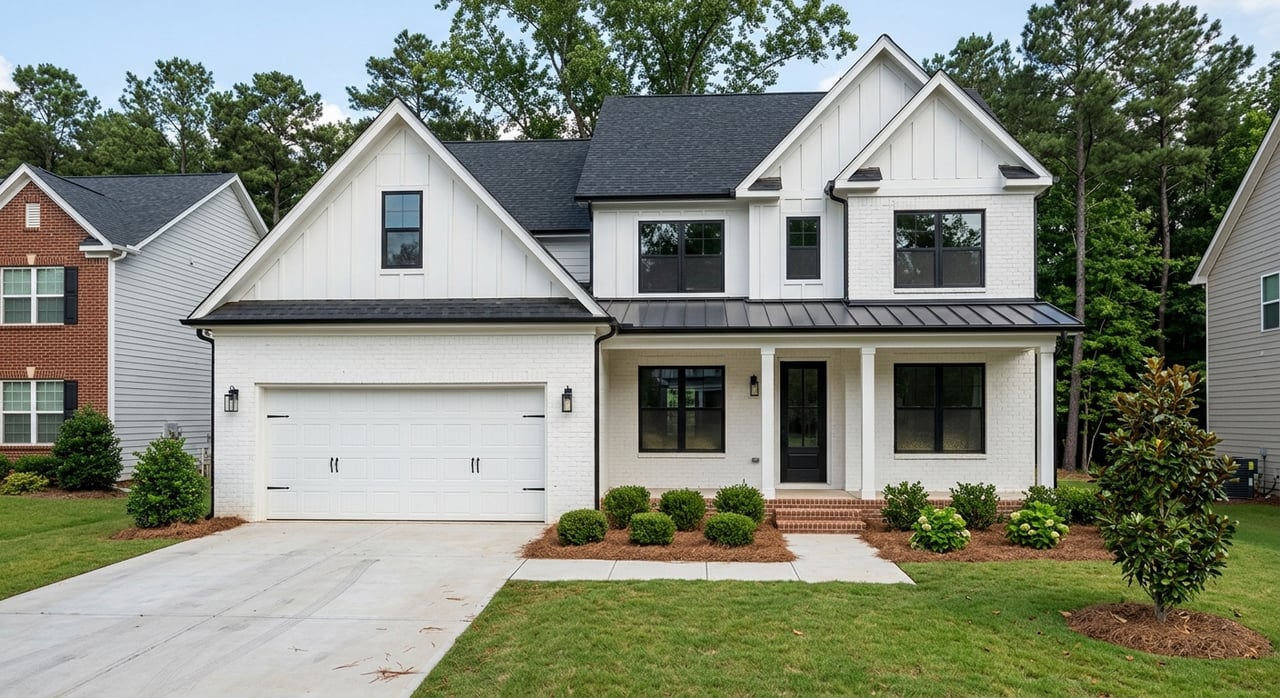
Trying to decide between a brand-new home and a resale home in Wake Forest? You are not alone. This is one of the biggest questions buyers face here, especially in a market where new communities, established neighborhoods, townhomes, and larger-lot properties can all look appealing for different reasons. The good news is that the right choice usually becomes clearer when you compare your budget, timeline, and lifestyle needs side by side. Let’s dive in.
Why this choice matters in Wake Forest
Wake Forest is not a one-size-fits-all market. The town has grown from a rural community into a suburban area shaped by connected neighborhoods, sidewalks, trails, and coordinated development.
That matters because your decision is often about more than the age of the home. In Wake Forest, lot layout, neighborhood design, HOA structure, and the overall feel of the community can be just as important as whether a home is newly built or already lived in.
As of March 2026, Wake Forest had a median sale price of $454,000. Realtor.com also reported a median listing price of $525,000, about 759 homes for sale, and a median of 39 days on market. Those numbers tell you there are options here, but comparing those options carefully can save you time, stress, and money.
New construction in Wake Forest
New construction appeals to buyers who want modern layouts, fresh finishes, and less immediate maintenance. In Wake Forest, it can also give you the chance to choose between quick move-in homes and homes that are built over time.
Many current new-construction listings highlight features buyers love today. You will often see open floor plans, kitchen islands, quartz countertops, shaker-style cabinets, stainless steel appliances, flex rooms, covered porches, and garages with different placement options.
New construction price ranges
Wake Forest new construction covers a wide range of price points. Homes.com lists 21 new-home communities and about 1,612 planned new-construction homes, with an average new-home price of $488,240.
Townhomes can be an especially important entry point. Current examples include townhomes from the high $200,000s to the mid $300,000s, such as The Townes at Prestleigh at $285,000 to $312,000, Enclave at Traditions at $320,000 to $330,000, and Meadow at Jones Dairy at $320,000 to $385,000.
Detached new homes typically run higher. Current examples include communities from about $401,000 to $575,000, while some higher-end options start well above that, including estate-style homesites that begin around $861,800.
New construction timeline
The biggest tradeoff with new construction is usually time. Some buyers can purchase a quick move-in home, which shortens the wait, but a to-be-built home often takes much longer.
Builder timelines commonly fall in the 6 to 8 month range once construction starts, and some estimate 6 to 12 months on average. In Wake Forest, timing can also depend on town review and permitting, along with infrastructure requirements like streets, sidewalks, curb and gutter, lighting, and water or sewer improvements.
If you are relocating or trying to line up a home sale with a purchase, that timeline matters. A resale home can often offer more certainty on move-in timing.
New construction HOA and neighborhood style
Many newer communities in Wake Forest include HOAs, though not all do. For example, some communities advertise monthly dues, while others have no HOA at all.
This is an important detail because HOA rules are separate from town zoning rules. The Town of Wake Forest does not enforce HOA covenants, so if you are comparing communities, you will want to look closely at dues, restrictions, maintenance expectations, and the overall neighborhood setup.
Resale homes in Wake Forest
Resale homes often attract buyers who want a faster closing, a more established setting, or a property with a different lot style than what many new communities offer. In Wake Forest, resale inventory can vary a lot in both look and value.
That variety can be a real advantage. Instead of choosing from a builder package, you may find homes with updated features, mature landscaping, detached garages, privacy fences, hardwood floors, or outdoor spaces that already feel finished.
Resale price and timing
Wake Forest resale homes currently center around the town’s $454,000 median sale price, though asking prices and final sale prices can differ by neighborhood, lot size, and condition. The median 39 days on market suggests buyers may still have choices, but timing can depend heavily on the specific home.
One clear benefit of resale is speed. Since the house already exists, you can move straight into the inspection, appraisal, financing, and closing stages instead of waiting through the construction process.
Resale lot sizes and established settings
If land is high on your wish list, resale may give you more to work with. Current resale examples in Wake Forest include homes on 0.72-acre, 1.29-acre, and even 2.6-acre lots.
That can be a big difference from newer subdivisions where lot patterns are often more compact and community design is more standardized. If you want more yard space, a wooded feel, or a neighborhood that already feels settled, resale often deserves a close look.
Resale finishes and condition range
Resale homes offer more variation than new construction. Some are fully updated with features like quartz countertops and tankless water heaters, while others may need cosmetic updates or more substantial work over time.
That range creates both opportunity and risk. You may find more character, more land, or a better location fit, but you also need to evaluate condition carefully and understand what repairs or upgrades may be needed after closing.
New construction versus resale at a glance
In Wake Forest, the cleanest comparison is not simply new versus old. It is really about which home type fits your priorities best.
| Factor | New Construction | Resale Home |
|---|---|---|
| Price range | Often townhomes in the high $200Ks to mid $300Ks, detached homes in the $400Ks to $500Ks, with higher-end options above that | Often varies widely around the local median, depending on age, lot, updates, and location |
| Timeline | Can be quick move-in or several months if built from the ground up | Usually faster because the home is already completed |
| Layout and finishes | Modern plans and current finish packages are common | Finishes vary from updated to original |
| Lot style | Often more uniform within planned communities | More likely to include larger lots and established surroundings |
| HOA | Common in newer communities, but not universal | Can vary widely by neighborhood |
| Customization | May allow some design selections depending on build stage | What you see is generally what you get |
How to choose the right fit
The best choice usually comes down to three questions: What can you comfortably spend, how soon do you need to move, and what kind of setting do you want?
If you want modern features, lower near-term maintenance, and the possibility of choosing finishes, new construction may be the better fit. This can be especially appealing if you are open to a planned community and your timeline has some flexibility.
If you want a faster move, a more established neighborhood, or a larger lot, resale may make more sense. This is often where buyers find homes with mature surroundings and more variation in style and land.
For many Wake Forest buyers, the real comparison looks like this:
- New townhome versus resale townhome
- New detached home in a planned community versus resale detached home on a larger lot
- Standard suburban lot versus wooded or estate-style property
- Quick move-in new home versus a resale home with a shorter path to closing
A practical Wake Forest strategy
Instead of asking whether new construction is better than resale, it helps to ask which tradeoffs matter most to you. A lower-price new townhome may fit a first-time buyer better than an older detached home with more upkeep. A resale property on a larger lot may fit a move-up buyer better than a new home with less outdoor space.
This is where local guidance becomes valuable. In Wake Forest, the right answer often depends on community layout, HOA structure, commute patterns, lot preference, and how much flexibility you have with timing.
If you are comparing options from out of town, the process can feel even more complex. Seeing the lot, the street, the surrounding homes, and the neighborhood flow can make a big difference when you are choosing between a polished new build and a resale home with more personality.
If you want help sorting through Wake Forest new construction and resale options, Carmelina Hall can help you compare neighborhoods, timelines, and home styles so you can move forward with confidence.
FAQs
What is the price difference between new construction and resale homes in Wake Forest?
- The gap is not fixed. Local data shows average new-home prices have been higher than older homes overall, but some new townhomes are priced below the Wake Forest resale median while many new detached homes are priced above it.
How long does it take to buy a new construction home in Wake Forest?
- It depends on whether the home is already completed, nearly completed, or to be built. Quick move-in homes can shorten the process, while a from-scratch build may take several months and can be affected by local review, permitting, and infrastructure requirements.
Are resale homes in Wake Forest more likely to have larger lots?
- Yes, resale homes are often where buyers find larger lots and more established settings. Current examples in Wake Forest include properties on lots well over half an acre and even several acres.
Do new construction neighborhoods in Wake Forest always have an HOA?
- No. HOAs are common in newer communities, but they are not universal. Rules and dues can vary widely, and HOA covenants are separate from the Town of Wake Forest’s zoning rules.
Is a resale home faster to close than new construction in Wake Forest?
- Usually, yes. Because the home already exists, you can focus on inspection, appraisal, financing, and closing instead of waiting for construction to be completed.